
Maynard Research Group
Department of Chemistry & Biochemistry
University of California, Los Angeles
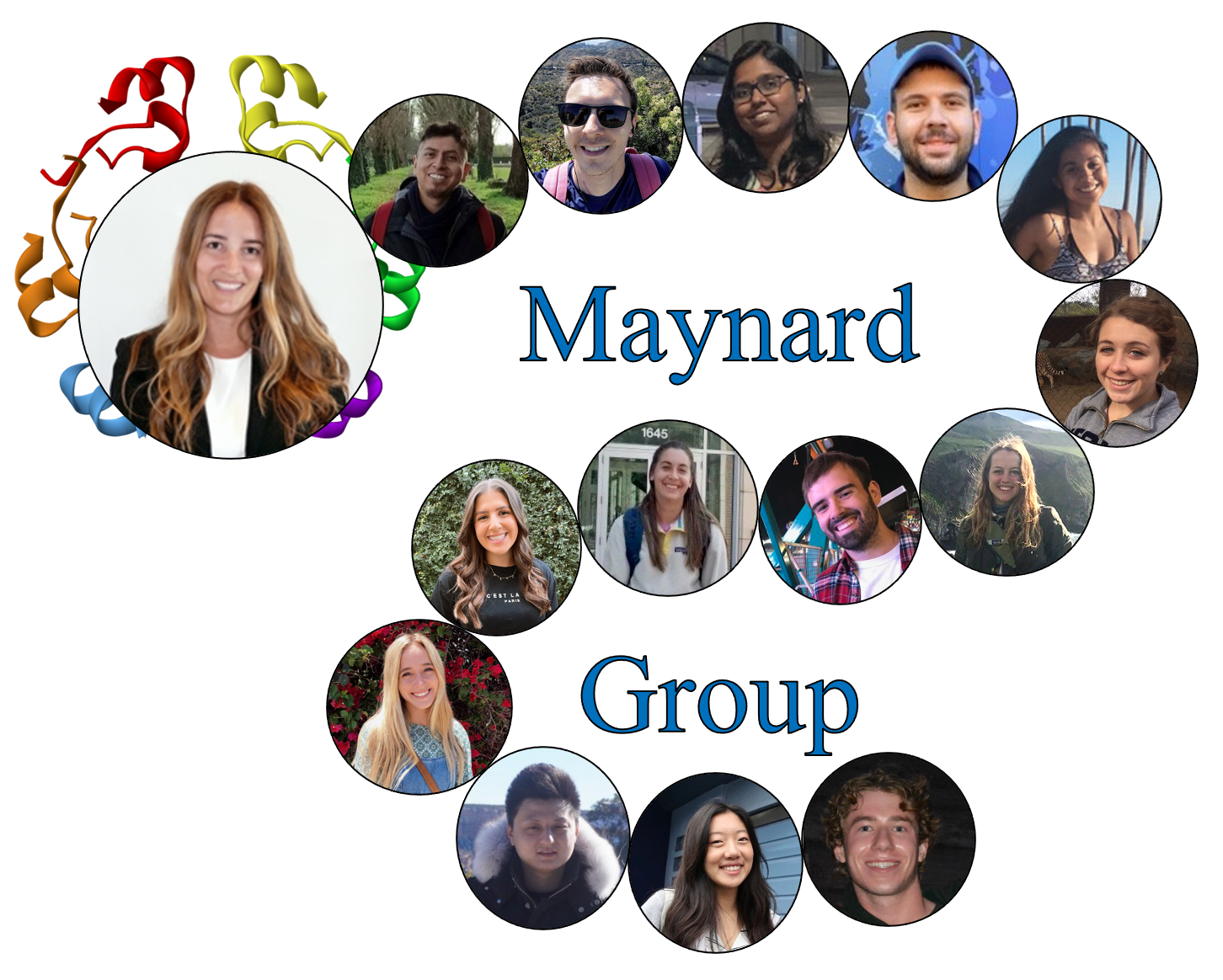
About the Maynard Group
We create new polymeric materials to address unmet needs in human health and sustainability while simultaneously educating the next generation of scientists.
Current Research Areas

Responsive Nanomedicines
Stimuli-responsive materials exhibit changes in one or more properties in response to an external trigger. We have developed materials including hydrogels and nanoparticles that respond to a variety of chemical or physical triggers for drug delivery. We apply these materials to proteins that are therapeutics for diabetes and cancer.
Next Generation Therapeutics and
Protein Delivery
Protein stability and half-life in vivo can be readily enhanced by the conjugation of a well-designed and defined polymer. Our group develops the synthesis of protein-polymer conjugates and designs polymeric stabilizers.
Novel Conjugation Methodologies
Current methods to conjugate proteins to other molecules often employ reversible strategies that limit their efficiency and therapeutic effect. To this end, we are developing new strategies to rapidly and chemoselectively conjugate small molecules and polymers to therapeutic peptides and proteins.
Diversity Statement
Professor Maynard and her research group members are strongly committed to promoting equity, inclusion, and diversity. We reject racism and prejudice of all kinds. We recognize that it is not enough to be non-racist and non-prejudiced—being anti-racist and anti-prejudice will create tangible and long-lasting change. Our group pledges to meet these words with action. Specifically, this includes:
Educating ourselves on the history of racism and other prejudices by reading literature, listening to or watching relevant podcasts and talks, and engaging in meaningful conversations with one another.
Attending all UCLA diversity oriented seminars and reflecting on them together during our group meetings
Participating in outreach activities focused on K-12 schools in marginalized communities
Assisting in the organization of UC-HBCU Initiative social events for HBCU students that visit/attend UCLA
Providing meaningful one-on-one recruiting and mentoring to students from historically marginalized communities
Working with the chemistry department to create an environment that not only includes, but also retains students from underrepresented groups
Publishing/reviewing papers for entities, journals, and organizations that are not racist or prejudiced
All group members are welcome regardless of race, ethnicity, national origin, citizenship status, religion, disability, veteran status, gender, gender identity, and sexual orientation. Ultimately, we have and promote a safe, inclusive, supportive, and equitable learning environment. Please visit the Outreach Tab for more details.
Open Positions
We have open positions for graduate students who have been already admitted to the UCLA program, but no open positions for postdocs or undergraduates at this time.