last updated
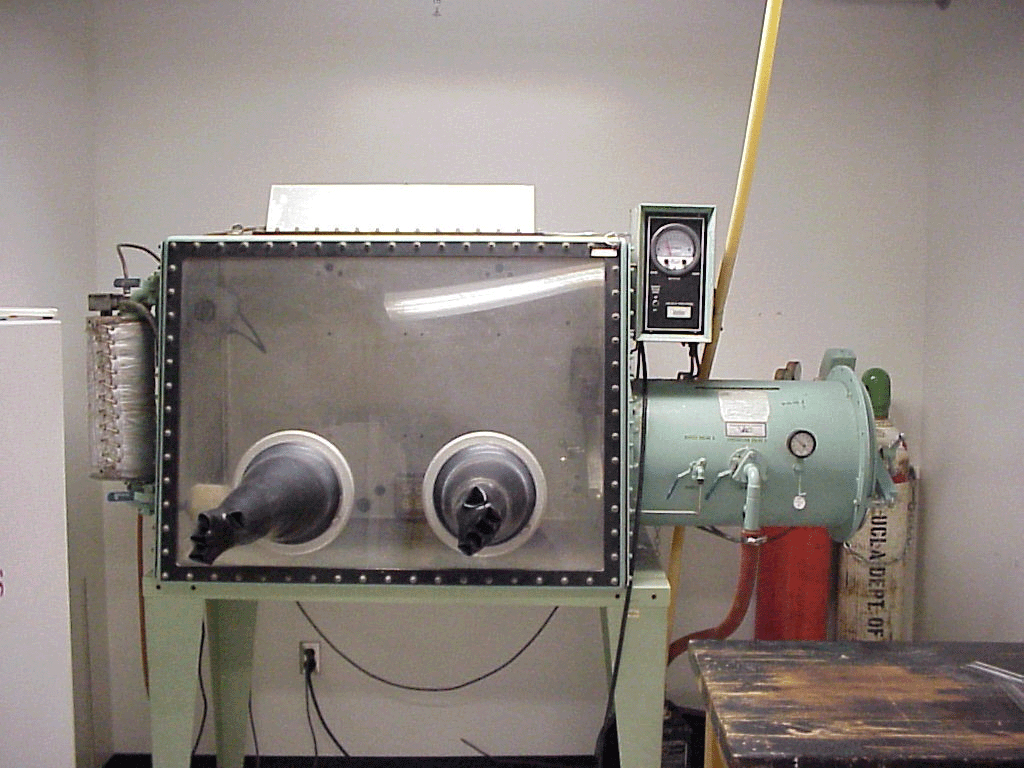
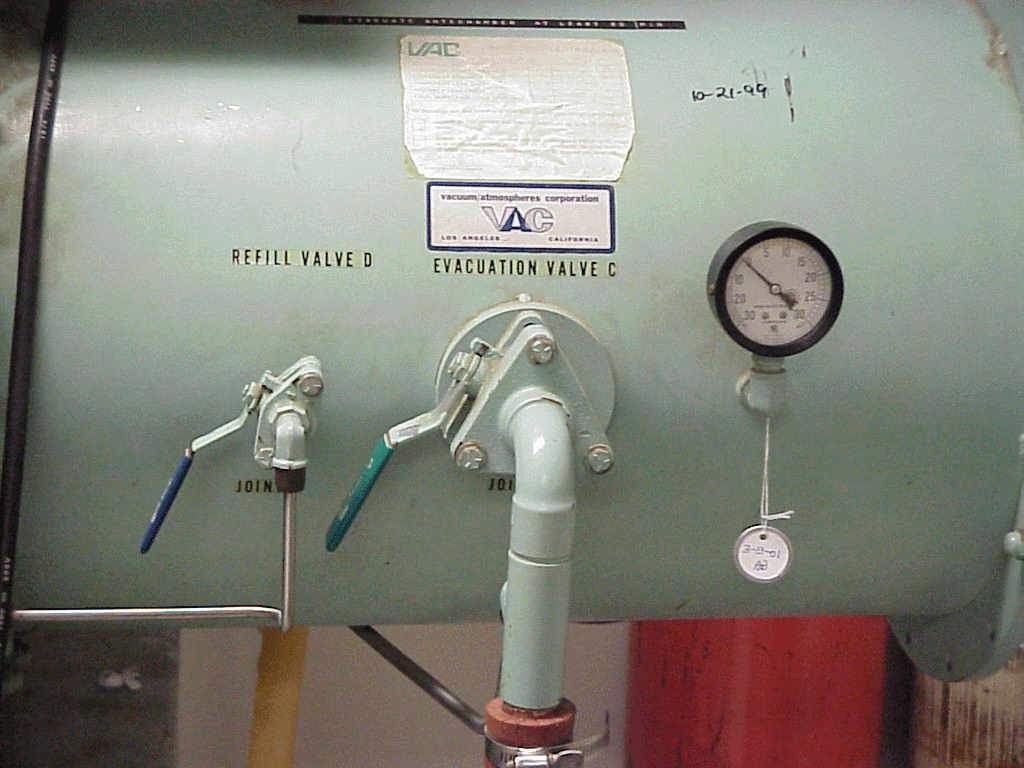
The glove box (front view) on the left, the valves at the anti-chamber on the right.
Some operations i.e., transfer of very air sensitive and pyrophoric compounds, will be carried out in a glove box. It is a chamber, which is kept under an inert atmosphere (nitrogen or argon). The entire setup consists of several parts: the chamber where you will work with the chemicals, the anti-chamber, the catalyst and the vacuum pump. Here are just a few pointers for the use of the glove box. The details will be explained in the laboratory. Before you are allowed to use the glove box, you will have to be checked out by the TA.
1. All containers that will have to be transferred into the glove box have to be evacuated. Stoppers and stopcocks have to be secured with clips, plastic clamps and rubber bands.
2 The anti-chamber has to be evacuated twice (~30 units) before anything is transferred into the chamber. This takes about 30 minutes.
3. All equipment like spatulas, flasks, containers, etc. should be in the anti-chamber.
4. Try to avoid using sharp objects i.e., razor blades, knives in the glove box. They can damage the rubber gloves.
5. The work in the glove box takes significantly more time than working outside, especially in the beginning. Thus, budgeting the time is very important!
6. All valves have to be closed before opening any door to the inside or outside.
7. If solids are transferred into containers, the containers have to be properly labeled and wrapped some parafilm around the lid.
8. The balance and the glove box has to be kept clean. All waste has to be taken out.
The catalyst on the left hand side consists of copper metal on a silica support. It reacts with oxygen in the inert gas and other sources. Molecular sieves absorb the byproducts (water, organic solvents). From time to time (usually before the class starts), the catalyst has to be recycled by treating it with a mixture of hydrogen and nitrogen (5/95).This usually takes about 24 hours period. Traditionally, the quality of the glovebox is tested with diethyl zinc.