Plants require CO2, water, sunlight and a few
minerals for growth and survival. Carbon contributes to biomass and
sunlight is the energy source. The mineral requirement includes elements,
found only at trace levels, like Fe, Zn, Cu and Mn, that enable the
catalysis of an amazing repertoire of reactions, especially in the
photosynthetic apparatus where biology’s most powerful oxidants and
reductants are found. This structure is rich in metalloproteins and
contributes to the high metal quota of some photosynthetic cells.
Environmental factors can limit the availability of metals,
especially Fe, but also Cu and Zn, and this naturally impacts
photosynthetic performance and hence global primary productivity.
The Merchant group has discovered mechanisms used by photosynthetic
organisms to optimize performance in face of changing metal supply,
especially limitation. Reduce, reuse and recycle! For instance, the
Cu quota is dramatically reduced (to less than 5% relative to a Cu
replete situation) by replacement of the copper-protein plastocyanin
in photosynthesis with a functionally equivalent heme-containing
cytochrome. This occurs through the action of a copper sensor and a
transcription factor that recognizes copper response elements
associated with the CYC6 gene. In parallel, plastocyanin is
degraded, releasing the Cu cofactor, which is re-used for the
biosynthesis of respiratory chain cytochrome oxidase. Similarly, Fe
is recycled by degradation of ferredoxin to support the synthesis of
an Fe-containing superoxide dismutase. The risk associated with the
dynamics of metal ion metabolism is reduced by intracellular storage
of these metals in a lysosome-related organelle. In ongoing work,
the Merchant laboratory uses elemental and protein mass spectrometry
in combination with live cell imaging of metal sensors, state
of the art nano secondary ion mass spectrometry and X-ray
fluorescence microscopy that offer high spatial resolution, and classical
genetics to discover and dissect the biochemistry of the metal
storing compartment.
Supported by NIGMS and DOE
Comparative
genomics of algae
The Merchant group is also taking advantage of
genome-sequencing based approaches for discovery of new components
and functions related to photosynthesis and chloroplast biology. The
group has amassed the largest collection of RNA-Seq data for
Chlamydomonas and we are presently creating co-expression networks with
a view to deducing the functions of the many unannotated and
uncharacterized proteins encoded in the algal genome. This work
complements the prior and ongoing phylogenomics approaches for
predicting functions for uncharacterized proteins in the plant
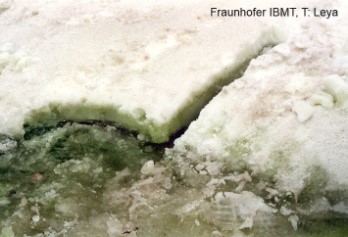
lineage. Genomes of extremophile algae, isolated from acid mines or
from the Svalbard archipelago, are being sequenced and assembled,
with a view to discovering mechanisms for light sensing,
photoprotection, CO2 concentration and pyrenoid structure and
function. In collaboration with the Niyogi group, we are developing
Chromochloris zofingiensis as another algal reference system.
Supported by DOE
Bioenergy
Rising concerns about energy security and the
environmental impacts of fossil fuel dependence has created a
resurgence in interest in alternative fuel sources. "Biodiesel
Fuel" by Prof. Suzanne Paulson of the UCLA Department of
Atmospheric & Oceanic Sciences and the Institute of the Environment
examines the different types of biodiesel fuel source material, the
resources needed to produce this fuel, climate impacts and future
applications. The Merchant laboratory has used systems biology
approaches, including metabolomics, proteomics and transcriptomics,
to deduce the metabolic pathways and regulatory factors that promote
the synthesis of triglycerides in Chlamydomonas.
Similar approaches will be applied to the
Chromochloris system.
Supported by DOE
Positions for Ph.D. students and post-doctoral
scholars may be available in 2019 for all Merchant laboratory projects.
Candidates with demonstrated research productivity (publication record)
and expertise in genetics or biochemistry are especially encouraged to
apply for post-doctoral positions. Ph.D. candidates should apply to one
of the following programs at UC-Berkeley.